


Maintaining a well-groomed yard involves knowing how to trim grass along a fence properly, especially when dealing with a wood fence. Trimming grass in these areas requires careful precision and appropriate tools to prevent damage to the fence while achieving a neat, professional look. Choosing to plant along a fence adds visual appeal but can also create challenges for lawn care, requiring a thoughtful approach to trimming and plant placement. Working with experts like Ace Fence Company Austin can ensure your fence and landscape stay in top condition. In this guide, we’ll explore key techniques for trimming grass, the importance of regular maintenance, and how to enhance the area with complementary plants for a lush, aesthetically pleasing outdoor space. With the right tips, your yard will look immaculate and boost the longevity of your fence.
What is grass trimming along a fence?
Grass trimming along a fence is the meticulous process of cutting and maintaining the edges of the lawn that abut the fence line. This essential task employs specialized tools to eliminate overgrown grass, crafting neat, tidy lines that delineate the boundary of a property. Not only does it prevent grass from encroaching upon the fence, but it also significantly enhances the overall aesthetic appeal of the landscape. Achieving effective grass trimming hinges on the judicious selection of equipment, the application of proper technique, and the timing of maintenance activities. Together, these elements ensure the grass’s health and the fence’s integrity, contributing to a polished and well-kept outdoor environment.
Tired of grass overgrowth along your fence line? Discover 7 expert tips for a neatly trimmed yard. https://t.co/wlo6hvEjAN #fencecare #fencemaintenance #fencetips #fence pic.twitter.com/w5E7V8RMj4
— Ace Fence Company Austin (@AceFenceAustin) April 30, 2024
Why trim grass along a fence?
Trimming grass along a fence is critical for a multitude of reasons. At its core, it prevents damage to the fence by ensuring that grass and invasive weeds do not grow too close, potentially introducing moisture and pests that can harm the fence materials. Moreover, this practice significantly enhances curb appeal, presenting a clean and orderly appearance that elevates the overall aesthetic value of the property. Importantly, consistent trimming promotes healthy grass growth. Cutting back overgrown or unhealthy grass fosters a more lush and vibrant lawn. These combined benefits highlight the essential nature of maintaining a neatly trimmed fence line, safeguarding both the health of your lawn and the durability of your fence.
Prevents damage to the fence
Trimming grass along a fence is vital for preventing moisture and pests from causing damage. Overgrown grass can harbor conditions that lead to rot in wooden fences and rust in metal ones. Regular trimming is preventative, safeguarding the fence’s integrity and avoiding costly repairs.
Next is: How Does Fence Installation Financing Work, and Is It Right for You?
Enhances curb appeal
A neatly maintained fence line significantly boosts the property’s visual appeal. It creates a polished, well-kept appearance that enhances the landscape’s aesthetic. This attention to detail makes the property more inviting and appealing, positively impacting first impressions.
Encourages healthy grass growth
Consistent trimming is crucial for promoting a denser and healthier lawn. Cutting back the grass ensures sunlight, water, and nutrients are evenly distributed, fostering vigorous growth. This practice leads to a lush, vibrant lawn, enhancing the garden’s beauty and supporting ecosystem health.
What tools are needed for trimming grass along a fence?
Selecting the right tools for trimming grass along a fence is essential for achieving a clean, precise cut while ensuring safety and efficiency. A string trimmer stands out for its flexibility and reach, making it ideal for navigating close to the fence without causing damage. An edger proves indispensable for creating sharp, defined boundaries that enhance the professional look of your landscape. In scenarios that demand meticulous attention or delicate handling, manual shears offer the precision necessary for intricate cuts around obstacles or tight spots. Lastly, prioritizing the user’s safety with protective gear—gloves, eye protection, and sturdy footwear—is critical. This ensemble of tools forms a comprehensive kit essential for maintaining a neat and orderly fence line, ensuring your landscape’s beauty and health.
String trimmer for efficient cutting
A string trimmer, also known as a weed whacker, is indispensable for its efficiency in cutting grass, particularly in areas that are challenging to reach with a conventional lawn mower. Its versatility allows for precise trimming along fences, ensuring edges are kept neat without risking damage to the fence itself.
Edger for precise boundaries
An edger is critical to achieving sharp, well-defined boundaries between the lawn and the fence. This tool excels in crafting clean lines that enhance the landscape’s professional appearance, making it essential for any meticulous lawn care routine.
Shears for manual precision cuts
Manual shears are used when precision is paramount, especially around delicate areas or tight spaces where power tools might be too cumbersome. They allow for precise cuts, ensuring that every detail is attended to with the utmost accuracy.
Protective gear for safety
The importance of protective gear must be balanced when performing lawn maintenance tasks. Safety glasses or goggles protect against flying debris, gloves safeguard hands from cuts and abrasions, and durable footwear provides stability and foot protection. This essential gear is vital for maintaining personal safety during the trimming process.
How do you prepare for grass trimming along a fence?
Preparing for grass trimming along a fence involves several vital steps to ensure both safety and efficiency:
- It’s important to clear debris and obstacles in the area. This not only prevents accidents but also protects your tools from potential damage.
- Marking hidden objects near the fence line, like sprinkler heads or utility lines, is crucial to avoid costly mishaps.
- Checking the weather forecast is advisable to select an optimal day for trimming.
Working with dry grass and under favorable weather conditions can significantly enhance the quality of your work and safeguard your equipment. Following these preparatory steps meticulously creates a safer work environment and lays the foundation for a cleaner, more precise trim.
Clear debris and obstacles for safety
Clearing away debris and obstacles before trimming grass along a fence is essential. This proactive measure ensures a safe working area and guards against potential damage to your equipment, making the trimming process smoother and more efficient.
Mark any hidden objects near the fence line to avoid accidents.
To prevent unintended accidents, it is crucial to identify and visibly mark any hidden objects near the fence line, such as sprinkler heads or buried utility lines. This step helps avoid disruptions and ensures a seamless trimming experience, safeguarding the operator and the equipment.
Check the weather forecast to choose an optimal day.
Consulting the weather forecast before scheduling your grass trimming is a wise strategy. Selecting a day with dry conditions makes the trimming process easier and protects your equipment from the adverse effects of moisture. This careful planning contributes to a more efficient and effective trimming session.
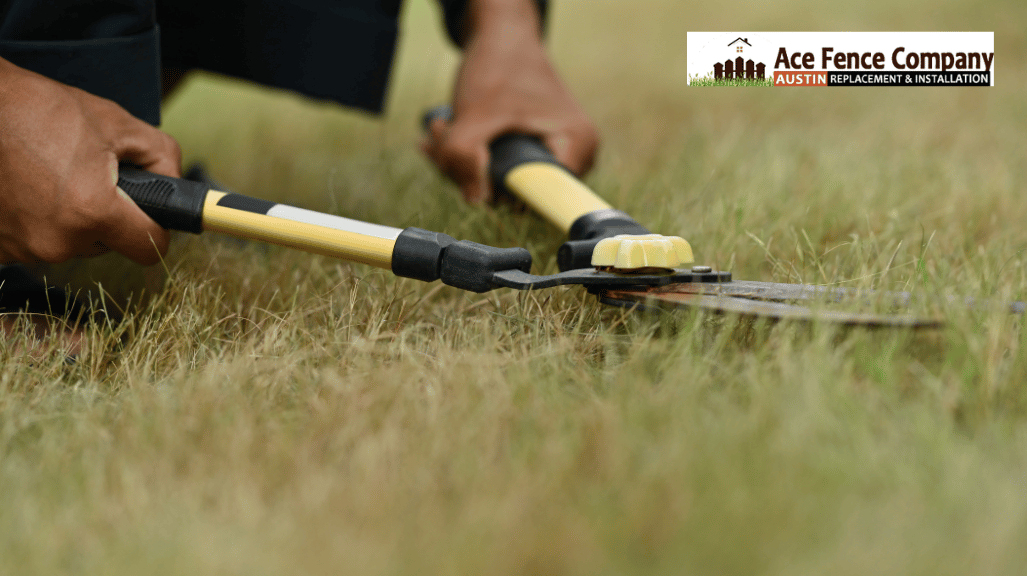
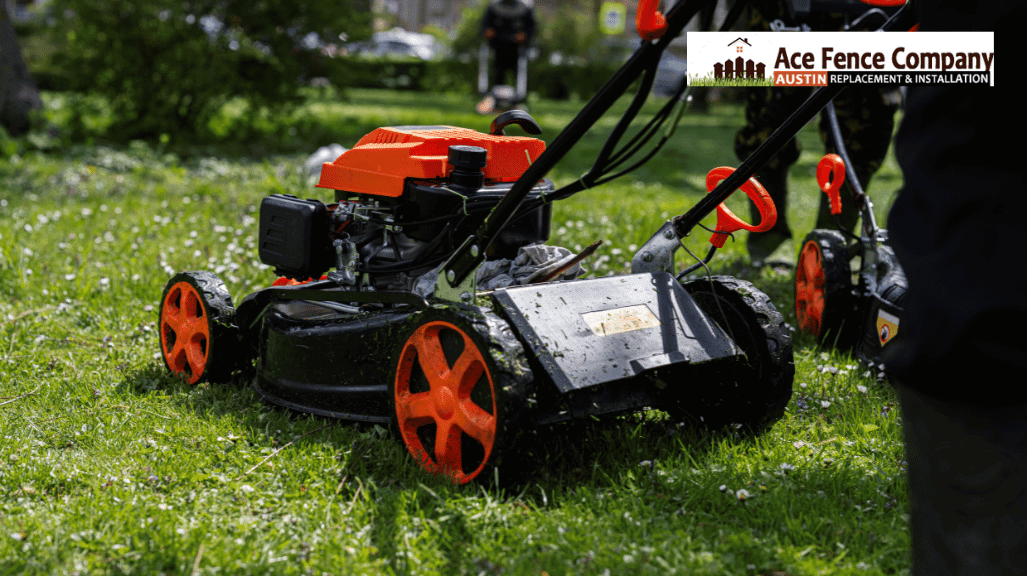
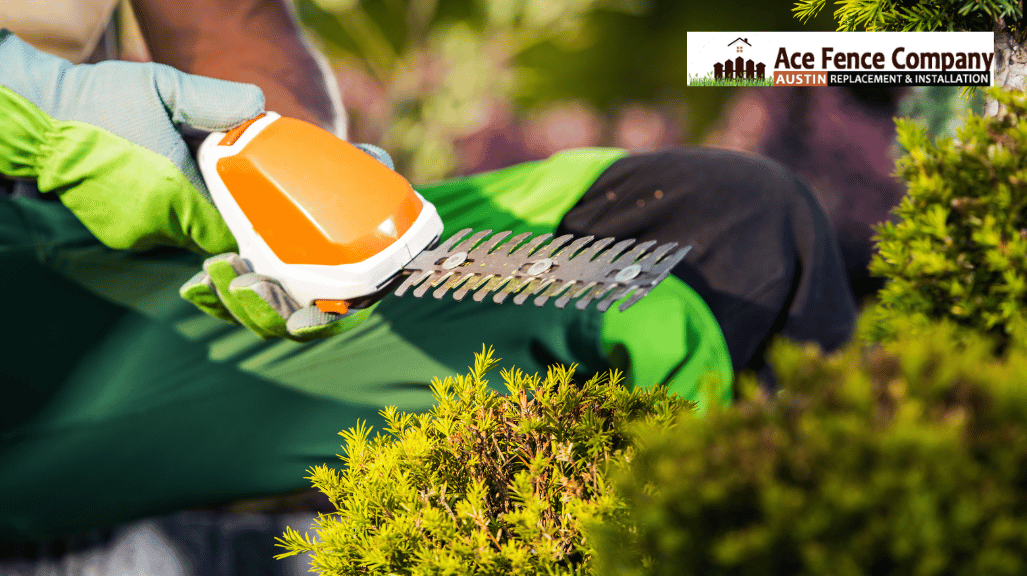
Tip 1: Use the right tool for the job
Selecting the right tool for trimming grass along a fence is crucial for achieving a clean, precise finish while ensuring the task is done efficiently and safely. String trimmers stand out for their flexibility and reach, ideal for navigating the unique contours and edges near fences. When crafting sharp, defined lines, an edger is the tool of choice, delivering a professional look. For areas that demand detailed attention, manual shears offer the precision needed for intricate cuts. Utilizing the appropriate tool for each specific task not only enhances the overall appearance of the lawn but also promotes the grass’s health and protects the fence’s integrity.
String trimmers for flexibility and reach
String trimmers provide unparalleled flexibility and reach, making them indispensable for navigating the complex contours along fences and around garden features. Their design allows easy maneuvering over uneven landscapes and into tight nooks, ensuring a comprehensive and uniform trim across the lawn’s perimeter.
Edgers for clean, straight lines
Edgers are the tool of choice for sculpting clean, straight lines that define the boundary between the lawn and the fence. They impart a sharp, professional edge to your landscape, significantly boosting its curb appeal with well-defined borders.
Manual shears for detailed trimming
When precision is paramount, manual shears provide detailed trimming with meticulous control. Ideal for fine-tuning around delicate areas or intricate landscaping features, manual shears ensure that every cut is made with intention and accuracy, preserving the integrity and beauty of the surrounding flora.
Tip 2: Maintain a steady hand and pace
Mastering the art of trimming grass along a fence necessitates maintaining a steady hand and consistent pace. Rushing the task can lead to uneven cuts, missed areas, and potential harm to grass and fence. By adopting a careful and methodical approach, each portion of the lawn receives precise attention, resulting in a clean, even edge that significantly boosts the landscape’s visual appeal. This disciplined technique elevates the quality of your work and reduces the likelihood of accidents, underscoring its importance in effective grass-trimming practices.
Avoid rushing to ensure even cuts.
To secure even cuts along the fence line, it is critical to avoid rushing through the trimming task. Quick, imprecise movements can lead to irregular cuts and overlooked areas, negatively impacting the overall aesthetic of the lawn. Taking the time for careful, deliberate cuts ensures the edges are neat and contributes to a more attractive landscape.
Practice consistent movement for uniformity.
Achieving a uniform look across the fence line necessitates practicing consistent movement with your trimming equipment. Maintaining a steady pace and direction during trimming helps ensure that the grass height and edge neatness are uniform, enhancing the polished appearance of your property’s outdoor space.
Tip 3: Trim grass when it’s dry
Trimming grass when dry is crucial for achieving clean, precise cuts. Wet grass can clump and stick together, posing challenges for trimmers and mowers by preventing even cuts, which can detract from the lawn’s overall appearance. Moreover, operating on dry grass significantly reduces the chance of tools becoming clogged, enhancing efficiency and extending lifespan. Additionally, the risk of slipping and potential accidents is minimized when working in dry conditions, making the task safer. Hence, timing your trimming activities when the lawn is dry is essential for maintaining its health and aesthetics and ensuring personal safety and optimal tool performance.
Wet grass can clog tools.
Trimming wet grass significantly increases the likelihood of clogging your tools. The moisture causes grass clippings to clump together, adhering to the blades and internal mechanisms of trimmers and mowers. This not only impedes their operation but also accelerates wear and tear, compromising the longevity of your equipment.
Dry grass ensures cleaner cuts.
Conversely, tackling the task on dry grass promotes cleaner, more precise cuts. The absence of moisture allows the cutting blades to glide through the grass effortlessly, ensuring a uniform trim. This meticulous approach significantly boosts the visual appeal of your lawn, contributing to a well-maintained and attractive landscape.
Tip 4: Adjust the cutting angle for tight spots
Navigating the challenges of trimming grass in tight spots around a fence requires a strategic adjustment in the cutting angle of your tools. This adaptation allows for enhanced precision and the ability to reach areas that are otherwise difficult to manage with a standard approach. By modifying the angle, you can maneuver around obstacles seamlessly, ensuring an even trim across every section of the lawn without risking damage to the fence or the trimming equipment. This careful adjustment improves the thoroughness of the trimming process and significantly contributes to the lawn’s overall neat and healthy appearance. Embracing this flexible trimming technique is essential for attaining a professionally manicured landscape.
Use different angles for hard-to-reach areas.
Using different angles with your trimming equipment is key to tackling the challenge of hard-to-reach areas around the fence. This strategy enables the achievement of precise cuts in confined spaces, ensuring comprehensive maintenance across the lawn. Adjusting your tool’s angle facilitates effective navigation around obstacles, leading to a more polished and uniformly maintained landscape.
Be mindful of the fence’s integrity.
When trimming grass along a fence, it is essential to protect its integrity. Inadvertent tool contact can inflict damage, incurring repair costs and compromising the fence’s aesthetic. By attentively monitoring the interaction between your tools and the fence and adjusting your approach as needed, you can safeguard the fence’s condition, preserving its structure and visual appeal.
Tip 5: Use a guard on your trimmer to protect the fence
Equipping your trimmer with a guard is crucial in protecting the fence while trimming the grass along its edge. This straightforward addition serves as a protective barrier, preventing the trimmer from causing accidental damage to the fence, such as scrapes or cuts, that could mar its structure and aesthetic. Using a guard not only preserves the fence’s longevity but also increases the safety of the trimming operation, enabling you to make precise cuts close to the fence without fear of causing harm. This approach highlights the significance of taking preventive measures to safeguard your property’s boundaries, ensuring the fence’s functional and visual integrity.
Prevents accidental damage to the fence
Incorporating a guard on your trimmer is a critical preventive measure against accidental damage to the fence. This protective feature ensures that the fence remains safe from unintended nicks, cuts, or scrapes, safeguarding its structural integrity and visual appeal during trimming.
Helps maintain a consistent distance from the fence
Moreover, a trimmer guard is essential in maintaining a consistent distance from the fence. This uniformity is critical to achieving even cuts along the fence line, significantly contributing to a polished and meticulously maintained edge of the lawn.

Tip 6: Clean up after trimming
Completing trimming grass along a fence is only part of the job; thorough cleanup afterward is equally important. This step involves properly disposing of grass clippings to maintain the area’s cleanliness and visual appeal. Additionally, carefully inspecting the fence for any damage that may have occurred during trimming is crucial for timely repairs, ensuring the fence’s durability and appearance are preserved. It’s also essential to examine your tools for signs of wear and tear, guaranteeing they remain in top condition for future tasks. This comprehensive cleanup process not only enhances your property’s overall aesthetic but also significantly extends the life of your fence and trimming equipment.
Dispose of grass clippings properly to maintain cleanliness.
Properly disposing of grass clippings is essential for maintaining your outdoor space’s cleanliness and aesthetic appeal. This step ensures that the area around the fence remains tidy and visually pleasing, reflecting well on the overall maintenance of your property.
Check for any damage to the fence for immediate repair.
Following the trimming process, it is vital to inspect the fence for damage. Promptly identifying and repairing any issues not only prevents further deterioration but also maintains the structural integrity and appearance of the fence, ensuring its longevity.
Inspect tools for wear and tear.
Regularly inspecting your trimming tools for signs of wear and tear is crucial to their upkeep. Early detection and addressing any damage allow for timely repairs or replacements, keeping your equipment in optimal condition for efficient and effective future use.
Tip 7: Regular maintenance is key
Adopting a regimen of regular maintenance is fundamental to achieving a pristine lawn and preserving the integrity of your fence. By establishing a schedule for routine trimming sessions, you not only uphold the lawn’s visual charm but also foster healthy grass growth. This diligent care prevents the potential for overgrowth that could harm the fence. Furthermore, consistently inspecting and maintaining your trimming tools ensures longevity and optimal functionality. This proactive stance on lawn and equipment care signifies a commitment to excellence in property management, ensuring that your landscape and tools remain in exemplary condition.
Schedule regular trimming sessions for a well-kept look.
Implementing a schedule for regular trimming sessions is critical to achieving a lawn that is not only healthy but also aesthetically pleasing. This routine care ensures a well-kept look, highlighting the property’s overall maintenance and dedication to landscape health.
Inspect and maintain your tools regularly for longevity.
Regularly inspect and maintain your trimming tools, which are imperative for longevity and performance. Actions such as cleaning, sharpening blades, and performing necessary repairs ensure that your equipment remains in prime condition and is ready to tackle each trimming session efficiently.
FAQ
What is the best tool for trimming grass along a fence?
A string trimmer, also known as a weed whacker, is highly effective for cutting grass along fences. This tool allows for precision and can navigate tight spaces and around obstacles.
How can I prevent damage to my fence while trimming grass?
Using a protective barrier or guard between the fence and the trimmer can prevent damage. Additionally, adjusting the trimmer’s cutting angle to avoid direct contact with the fence enhances safety.
Is there a technique to efficiently trim grass along a fence?
Yes, moving in a steady, parallel motion along the fence line ensures an even cut. Starting from one end and working systematically to the other end minimizes missed spots and ensures thoroughness.
How often should I trim grass along my fence?
The frequency depends on the grass growth rate and the desired lawn appearance. Typically, trimming every 2-3 weeks during the growing season keeps edges neat and prevents overgrowth.
Can mulching be beneficial when trimming grass along a fence?
Yes, mulching the trimmed grass can be beneficial as it returns nutrients to the soil, promoting healthier lawn growth. Ensure the trimmer is capable of mulching to achieve this benefit.